

During a recent ministerial summit, Greece’s representative suggested creating a communication group via WhatsApp or Signal to exchange… data
At a time when airlines are grounding aircraft and authorities are urging citizens to limit their travel, Europe’s attempt to prevent shortages due to the war in Iran is stumbling upon an unexpected problem: no one knows exactly how much fuel the continent possesses. Concern is intensifying as the war in Iran sends the cost of fossil fuels for Europe skyrocketing and threatens to sever flows through the Straits of Hormuz, a critical artery for oil and gas. European Commission President Ursula von der Leyen stated that the conflict is costing the EU nearly 500 million euros daily in increased energy costs, while US President Donald Trump has called for preparations for a prolonged blockade of Iran, which could further disrupt global energy markets. "In Europe, we have visibility and commitments until May and June… what happens after that is difficult to predict," said Tobias Meyer, CEO of DHL Group. "There are strategic reserves, but there is no clear picture of how much has been used."
Limited information and "blind spots"
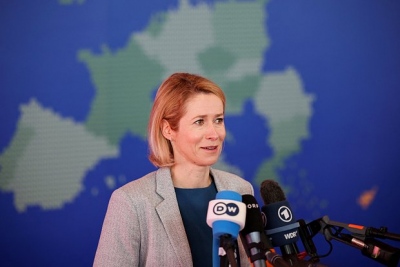
European authorities are not entirely in the dark. Data regarding state oil and gas reserves are generally transparent and up-to-date, while there are regular exchanges of information between states and occasional briefings from companies. However, beyond these, officials have little data on when reserves might run out—a serious gap that could lead to either a delayed reaction or emergency decisions based on incomplete evidence. At a recent summit, ministers from Belgium, the Netherlands, and Spain highlighted these gaps, calling for better coordination and real-time monitoring, particularly for refined products. According to Politico, Greece’s representative even proposed creating a communication group via WhatsApp or Signal between member states and the Commission. "We have very limited market knowledge and data on oil and gas," a senior official noted. "There is a clear lack of market monitoring."
The "cloudy" landscape of refined fuels
The picture is even more blurred regarding fuels such as diesel and aviation fuel. The EU relies primarily on Eurostat and coordination meetings, yet most stocks are held in private facilities, with companies avoiding the disclosure of sensitive data. Even data from the International Energy Agency (IEA) is limited. "In an ideal world, we would have full information," a Commission official stated. "In practice, however, we rely only on what we are given."
Plans for better oversight
Energy ministers are calling for an enhancement of the EU's capacity to record reserves—from underground storage to port tanks and supertankers. The European Commission has already recognized the problem and is planning the creation of a "Fuel Observatory" to monitor production, imports, exports, and stocks. Natural gas is easier to track due to regulations mandating storage at 90% before winter. However, the picture for flows and cross-border trade remains incomplete.
Delayed data and uncertainty
Eurostat publishes data on petroleum products, but not frequently. The most recent complete data is from January. At that time, most EU countries met the requirement for 90-day reserves. But what has happened since then? "It is very difficult to have an updated picture," an official admits. "We know what they should have, but not what they actually have." Companies, for their part, refuse to share data. "They don't want to give information," another official said, while Alain Mathuren from FuelsEurope noted that such exchanges might violate competition rules.
The "fog" of war
Available data is not encouraging. Natural gas stocks were already low before the crisis, below 30% of capacity, due to heavy winter consumption. Their replenishment depends on trader incentives, but the war in Iran threatens to overturn standard price dynamics. Meanwhile, the redirection of energy flows is affecting Europe. Tankers are heading directly to Asia, reducing available quantities.
Technology and monitoring limitations
Crude oil stocks can be monitored almost in real-time through satellite imagery. However, other forms of fuel, such as jet fuel, are much harder to record. Conversely, products like naphtha are more easily tracked through daily surveys, offering a clearer picture.
Mixed impacts on industry
Despite the difficulties, the European petrochemical industry seems to be partially benefiting from the crisis due to reduced competition from the Middle East and Asia. However, data remains uncertain. "We must treat it with caution," analysts note. "We wouldn't bet everything on it—but it shows the general trend."
www.bankingnews.gr



Σχόλια αναγνωστών